Water Under Paper
A Northing novella

Movement I: High Water
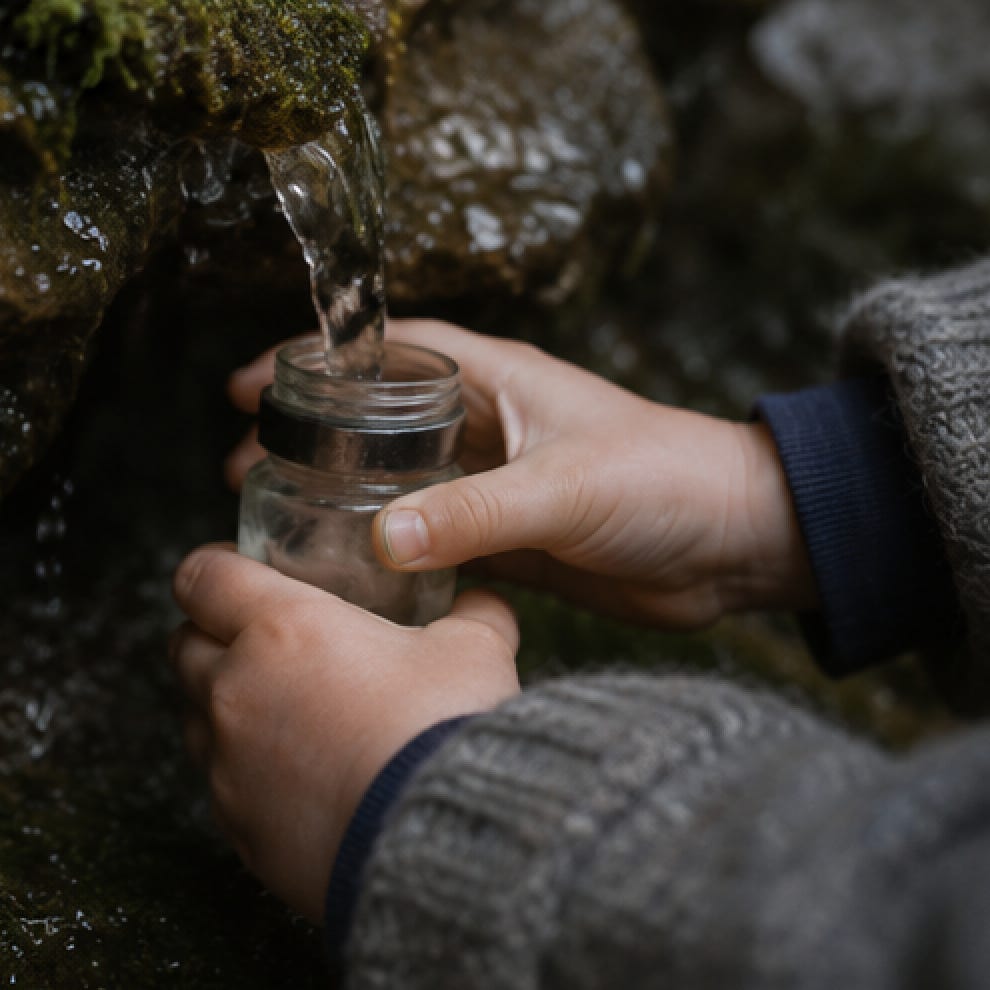
The spring came up out of the hill the way it always had, at the foot of the ledge where the ferns started, and Cécile stood over it with the jug already tilted to the flow and counted under her breath, though she had not needed to count in fifty years. She counted because the girl was beside her and the girl liked the numbers, and because her son had liked the numbers too, once, at this same lip, before he had stopped coming up the hill. That was a thing she did not say at the water. She had found there were more and more things she did not say at the water, and that the water did not seem to mind carrying them, and she brought them up here now the way another woman might carry them to a church.
“Twenty-six,” the girl said. “It filled at twenty-six.”
“It filled at about that.”
“It was twenty-six. I counted with you.”
“Then it was twenty-six,” Cécile said, because the girl was right, the girl was nearly always right about the count, having a child’s clean ear for it. “In August you’ll count past fifty and think the spring has quit on you. It won’t have. That’s only it showing you the bottom of what it does. You want to know a water, you learn the top of it and the bottom both, and you don’t get scared at the bottom.”
“Papa says it has to be tested.”
Cécile brought the jug up off the flow and set it on the flat stone and did not answer at once. The water ran on off the ledge into the sound it made, which was the only sound up here besides the two of them, and she let it have the moment.
“Did he,” she said.
“He says you can’t just drink water. He says you have to know what’s in it.”
“We know what’s in it. Water’s in it.” She said it lightly, to make the girl laugh, and the girl did laugh, but Cécile heard the thing under her own voice and did not care for it, the thin wire of it, and she smoothed it out before she went on. “Your papa has a job that’s about knowing things a certain way. It’s a good job and it’s an honest one. There’s more than one way to know a thing, is all. Fill the small one for me. Count.”
The girl filled the small jug and counted and it came to twenty-four this time, the water higher yet from a rain in the night, and she said twenty-four and Cécile said then it was twenty-four, and for a while they only worked, the two of them, the old woman and the child, dipping and filling and setting the vessels in a row on the stone, and it was good, and Cécile let herself have that too, because she had learned you took the good hours when the water gave them and did not spend them worrying about the ones that hadn’t come yet.
When the jugs were full the girl did what she always did, which was to cup both hands under the ledge and drink, noisily, and come up with her chin streaming and pronounce on it the way the men pronounced on the coffee down at the store, too cold, no body to it, wouldn’t serve it to a dog. Cécile told her it had been good enough for better people than her for a hundred years. The girl said she was only saying, and drank again, grinning into her hands. It was a joke they had worn smooth between them over a good many mornings, and it was not funny, and they laughed at it anyway, the way you laugh at the worn things with the people you keep, and the laugh went out over the water and the water took it the same as it took everything, without seeming to keep any of it, and came up cold.
The path to the spring was hers and her mother’s before her and worn further back than she troubled to reckon, a single line coming down off the shoulder of the hill through the fern and the wet moss to the lip of the seep, and it stayed worn because it was walked and it was walked because the water was there. Nobody had ever built anything at the spring. There was the flat stone, which was only a stone that happened to be flat and near. There was the mended lip of the ledge. There was the fern, and that was the whole of it, and she had always thought it was the better for wanting nothing, this water that asked for no house and no cover and no man to tend it, that had outlasted every hand that ever dipped from it and would outlast hers. You left a water alone. You went to it. You did not make it come to you, and you did not, she thought and did not say, put it in a bottle and send it away in a truck to be told by strangers whether it was fit to do what it had done without fail since before the strangers’ grandfathers were born.
The girl had gone down on her heels at the edge of the seep, where the sand turned over on itself in a slow boil, one center to it and then, if you watched longer, a second a little off to the side, fainter, so that you could never quite say whether the spring was one spring or two come up close together into the same run. Cécile had looked into that all her life and never settled it. The girl would look into it too, this year and the next, and not settle it either, and that was one of the things the water gave a person, a thing you could look at your whole life and never use up. She reached down without seeming to and took the girl’s collar and drew her back off the wet give of the bank, gently, so the girl would carry the caution in her body and not in a warning.
“There’s two today,” the girl said.
“Some days there’s two. Tomorrow you’ll come and there’ll be one, and you’ll be just as sure of the one.”
“Papa’s coming up today,” the girl said. “He’s bringing the kit.”
So that was it, then. That was why the girl had the testing in her mouth. Cécile straightened and looked down the hill, though there was nothing to see from here but the tops of the trees going down toward the road, and she felt the day change under her, the way you feel a cloud come across the sun before you have looked up to find it.
“Is he,” she said.
#
Perras had told himself, driving up, that he was not going to make anything of it.
He came down the meadow road first, which was out of his way, because he wanted to see the water high, a thing he had done in April every year of his life the way another man goes to a ballgame, and because he was, if he was honest, putting off the hill a little longer. He came around the last bend and there it was, and it stopped him: not the water, the flagging. Fluorescent orange along the low ground, knotted to fresh stakes driven into the flood-wet sedge where the two channels shouldered together, a line of them going up the meadow, each with its numbers in carpenter’s pencil not yet run by any rain, each with its tail of orange telling you where to look for the next.
He got out and stood with the water loud in front of him and did not touch the stakes. He knew what they were as anyone raised in the valley knew, which was well enough to feel the weather of them without reading the figures. Somebody had walked this ground with a transit and set it down in numbers. Somebody meant to know the low meadow as it had not been known before, and a man did not spend money learning a piece of wet ground in stations and bearings for the love of it. There was a word going around the store, and the word was development, and half of what wore that word came to nothing, and he had watched the other half not come to nothing. He had heard, when he was a boy, the old men talk about the low water down the far end of the valley, the piece they had piped and filled and run a road across, and how it was supposed to be that you did not lose a water like that, that it only went under and ran the same where you could not see it. He had believed that when he was a boy. He was not a boy.
And the stakes in the meadow were not the only paper on the ground that spring. There was a man named Bushey going over the hill above the spring with a forester’s tapes, cruising the standing timber for whoever meant to buy the parcel or sell it, and Bushey did not walk a woodlot counting board feet for his health any more than a man ran a survey line for the love of it. Perras knew him a little. Bushey had marked his father’s firewood lot the better part of thirty years back and been square about every stick of it, and that was the trouble of it, because a stranger measuring the trees over the ground the spring rose out of you could put out of your mind, and a square man you could not. If it came to it, Perras thought, Bushey was a man you could call and get a straight answer from, and he kept that without deciding to use it, the way you keep a number against a day you hope will not come.
He thought about the spring the whole way up the hill after that, and he thought about the girl, and under both, where he did not look at it straight, he thought about the girl’s mother, who had gone from being a person who was tired to a person who was sick to a person who was not there in less than a year, and whom no amount of anyone knowing anything a certain way had saved. He did not let that thought come all the way up. He had gotten good, in three years, at not letting it come all the way up. But it was there under everything the way the warmth was said to be under the water, and it worked back toward the surface when he was tired, and he was tired.
He wanted the water tested. He could not have said the want cleanly even to himself, but it ran something like this: that his mother trusted the spring because it had never once failed her, and that he had learned, the hard way and for good, that a thing not having failed you yet was not the same as a thing that would not fail you, and that he had a daughter who drank from that water eight months of the year, and that he could not any longer stand in front of a thing his child put in her body and simply believe it good because it had always been good. He wanted a paper. He wanted a box stamped by a lab that said the count, the number, the fact, so that when he lay awake he could put his hand on a certainty instead of a faith. He knew what his mother would say. His mother would say that was no way to love a water or a child either, from behind a piece of paper, at arm’s length, afraid. And his mother would not be entirely wrong, and that was the part he could not stand.
She was at the shed when he came up, setting the last of the filled jugs in the cool of it, and the girl ran to him and he caught her up and the ordinary gladness of that got them past the first minute, which was a mercy, because he did not know how to say hello to his mother anymore in a way that did not have the whole of it in it.
“You brought your kit,” Cécile said. She had seen the case in his other hand.
“I did.”
“You’re going to test my spring.”
“I’m going to test the spring, yeah.” He set the girl down. “It’s not yours to test or mine to leave alone, that’s the thing of it. Half the valley’s going to be somebody’s lots inside two years, the way it’s going. If it’s going on somebody’s paper it ought to go on the right paper, ours, the town’s, with the numbers on it, before it goes on the developer’s. A tested spring on record is a thing you can hold onto when a man with a plan shows up. An untested one is just water to him. He’ll pipe it and never know what he covered.”
It was a good argument. He had built it carefully on the drive so that it would be a good argument, so that it would be about the survey and the development and the town and not about the other thing, and he watched his mother take it in and he watched her decline to be fooled by it, and he loved her and could have wept at her for how she saw straight through the good argument to the frightened man holding it.
“You never used to be afraid of this water,” she said.
“I was never afraid of any water,” he said. “That was the trouble.”
The girl stood between them at about the height of their two hands, looking up from the one to the other as a child does when the words the grown people are using are small and calm and the thing underneath them is large, and Cécile saw her looking and put an end to it, because whatever this was it was not going to be done over the child’s head at the mouth of the shed.
“Test it, then,” she said. “It’ll tell you what I could have told you and saved the lab the trouble. But you’ll take her up with you and you’ll let her hold the bottle. If you’re going to teach my granddaughter that the water she drinks is a thing to be doubted until a stranger signs off on it, you’ll at least let her doubt it with her own hands in it, and not learn it off a piece of mail.”
Perras opened his mouth and shut it. It was, he understood, the most his mother was going to give him, and it was more than he had any right to, and it had a hook in it the size of his whole life, and he took it.
So the three of them went up the worn path in the last of the light, the man and the old woman and the child, to put a water that had never needed asking into a bottle and ask it. The girl carried the sample jar because she had been told to, and held it out under the flow where it came off the ledge exactly as she had held the drinking jug an hour before, so that the gathering-to-doubt and the gathering-to-drink were the same motion in her small hands and she could not yet feel the difference the grown people felt, and the spring came up cold and certain out of the dark of the hill, one center to it and maybe two, and filled the jar before she had counted very far at all.
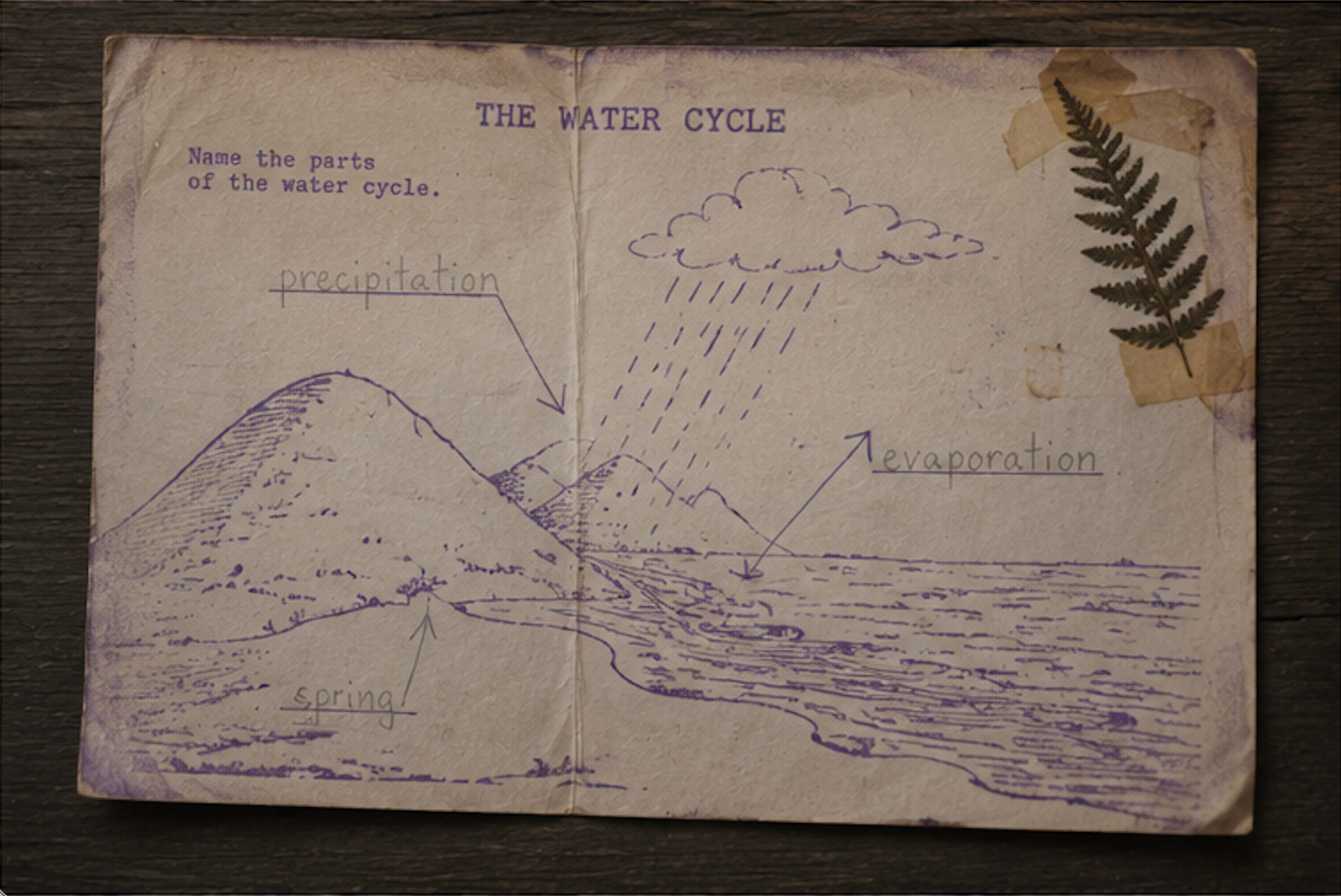
Perras capped it and labeled it in the fading light, the collector’s name and the date and the place, and drew a small careful thumbnail of the seep in the corner of the form as the instructions said, a map so a stranger could find the spot, as though the spot were a thing that could be lost. Behind him his mother watched the water and said nothing, and the girl watched her father’s pencil, and none of the three of them said the thing each of them was thinking, which was a different thing in each of them, and the water ran on off the ledge into the sound it made and did not care, or did, in the way that Cécile had come to believe over a long life that it cared, which was by staying, by coming up cold out of the far-down dark night after night whether anyone was there to count it or not, and by keeping, against all the paper in the world, its own counsel about what it was.